
Want to keep more cash in your wallet? Mastering these proven Shopping Tips transforms you from a vulnerable consumer into a savvy, strategic buyer.
This comprehensive guide breaks down exactly how to reduce your expenses without sacrificing quality. You will discover practical methods to leverage technology, outsmart retail psychology, and build sustainable spending habits that protect your long-term financial health and boost your bank account.
Pre-Shopping Preparation: Setting Up for Success

The foundation of saving money begins long before you step foot in a store or open a browser tab. Proper planning prevents poor purchasing decisions.
1. Enforce the 30-Day Delay Rule
Immediate gratification destroys budgets. When you see a non-essential item you desperately want, force yourself to wait exactly 30 days before buying it. Write the item and the date on a list, and walk away.
Most of the time, the intense desire fades after a few days. If you still genuinely need the item after a month, you can purchase it with a clear conscience. This single habit drastically reduces impulse buying and keeps your home free of clutter.
2. Master the Reverse Shopping List
Most people look at recipes, write down ingredients, and go to the store. You should do the exact opposite. Open your pantry, fridge, and freezer to see what you already own.
Build your meal plans around these existing items. You only buy the missing components needed to complete the meals. This strategy slashes your grocery bill and drastically reduces food waste in your household.
3. Implement Strict Budgeting Strategies
You must give every dollar a job before you spend it. Use digital apps or a simple spreadsheet to outline exactly how much you can spend on groceries, clothes, and entertainment.
When you establish firm boundaries, you remove the emotion from spending. Excellent budgeting strategies force you to prioritize your financial goals over fleeting retail temptations. You remain in total control of your money.
4. Track the Retail Sales Cycle
Retailers follow a highly predictable calendar for major discounts. January brings “white sales” on linens and bedding. August offers massive discounts on laptops and office supplies.
Study these annual cycles so you never pay full price for major items. If you need a new television, wait until November for Black Friday deals. Patience combined with timing guarantees the lowest possible price.
5. Calculate the Cost Per Use
Cheap items often cost more in the long run. If you buy a $20 pair of shoes that falls apart in two months, you waste money. A $100 pair that lasts for three years offers far better value.
Divide the price of the item by the number of times you expect to use it. This calculation helps you justify spending more upfront for high-quality items. Quality goods save you money and frustration over time.
Digital Shopping Hacks: Outsmarting the Algorithm

E-commerce platforms use advanced algorithms to get you to spend more. You can use your own technological tricks to beat them at their own game.
6. Abandon Your Online Cart
Retailers hate losing a sale when you are steps away from checking out. Add the items you want to your digital cart, enter your email address, and close the browser.
Wait 24 to 48 hours. Many companies will send you an automated email featuring a 10% or 20% discount code to encourage you to finish the transaction. This easy trick works on thousands of major retail websites.
7. Install Price Tracking Tools
Prices on major retail sites fluctuate daily. You should never assume the current price is the best deal. Install robust price tracking tools directly into your web browser.
Tools like CamelCamelCamel monitor Amazon price histories and show you if a “sale” is actually a bargain. You can set up alerts to notify you the second a product drops to your target price.
8. Stack Your Cashback Rewards
Never make an online purchase without getting paid to do it. Sign up for portals like Rakuten, TopCashback, or Swagbucks. Click through their links before checking out at your favorite stores.
These sites earn a commission for referring you, and they share that commission with you. Stack these cashback rewards with a high-yield rewards credit card to double your earnings on a single transaction.
9. Hunt for Discount Codes
Never leave the promo code box empty at checkout. Before you finalize a purchase, open a new tab and search for the store name plus “promo code.”
You can also use browser extensions like Honey or RetailMeNot to automatically test known discount codes in seconds. Even a modest free shipping code keeps an extra five or ten dollars in your pocket.
10. Browse in Incognito Mode
Airlines and hotels sometimes use dynamic pricing. They track your cookies and raise prices if they notice you repeatedly checking the same flight or room.
Open a private or incognito browsing window when shopping for travel accommodations. This hides your search history and forces the website to show you the baseline price. It prevents algorithms from penalizing your persistent research.
11. Compare Online vs. In-Store Pricing
Retailers often charge different prices for the exact same item depending on where you buy it. Some stores offer online-only discounts, while others mark down physical inventory to clear shelf space.
Check the store’s app while you stand in the physical aisle. If the online price is cheaper, select the “buy online, pick up in-store” option to secure the discount immediately.
12. Utilize Virtual Wishlists
Do not use your shopping cart as a storage area for items you like. Seeing a full cart tricks your brain into feeling ready to buy.
Move those items to a private wishlist instead. This creates a psychological barrier between browsing and buying. You can review the wishlist at the end of the month and purchase only the items that align with your goals.
In-Store Tactics: Navigating the Aisles
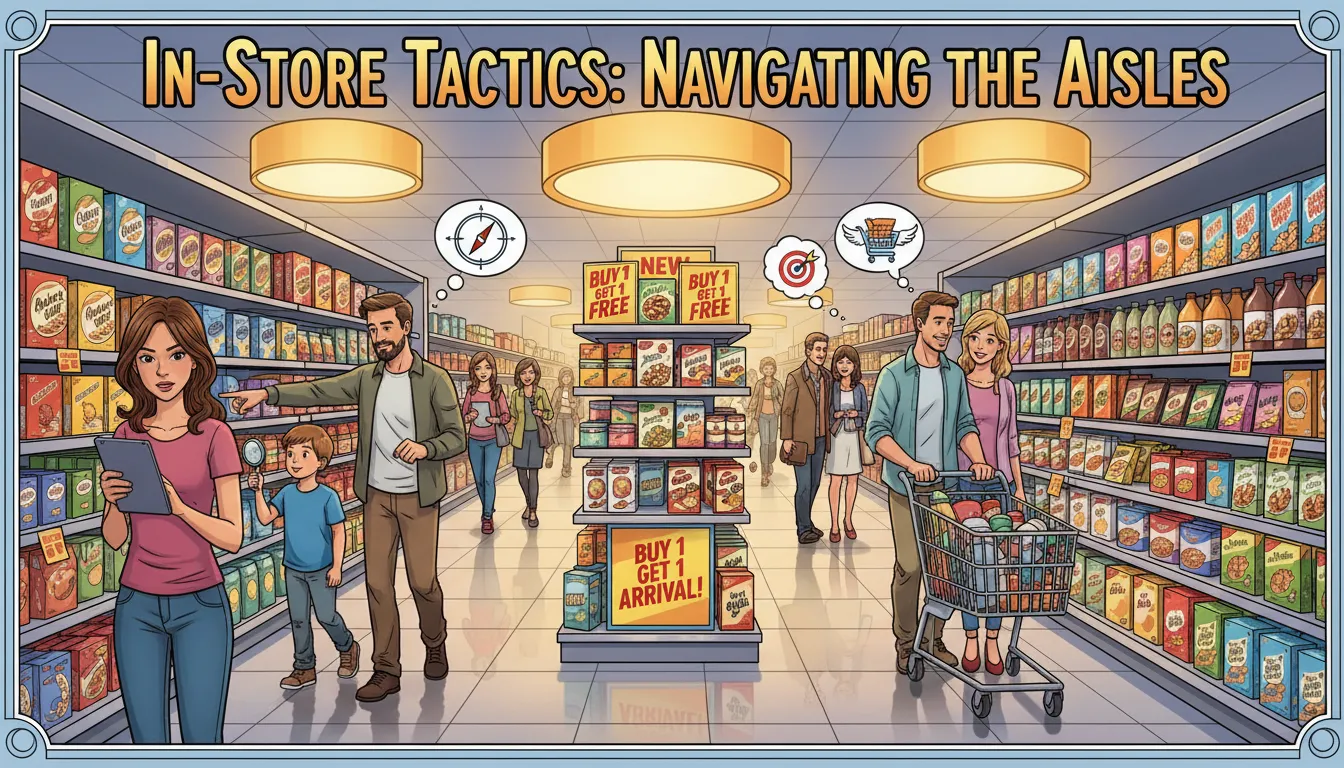
Physical stores use layout, lighting, and music to manipulate your spending habits. Use these tactics to stay focused and protect your wallet.
13. Look High and Look Low
Supermarkets pay careful attention to product placement. They stock the most expensive, highest-margin items right at your eye level.
Always scan the very top and very bottom shelves. You will almost always find cheaper alternatives and bulk packaging in these less visible areas. Stretching your neck a few inches saves you significant cash.
14. Understand Unit Pricing
A massive box of cereal is not always cheaper than the standard size. You must look at the unit price, typically displayed in the corner of the shelf tag.
Compare the cost per ounce or cost per 100 grams. This objective metric reveals the true value of the product. It protects you from deceptive packaging that makes less food look like a better deal.
15. Capitalize on Price Matching
Many major retailers refuse to lose your business to a competitor. Target, Best Buy, and Walmart often feature generous price matching policies.
If you find the exact same item advertised cheaper at a local competitor or a major online retailer, show the cashier the ad. They will lower the price on the spot. This saves you the gas and time of driving to multiple stores.
16. Give Generic Brands a Fair Trial
Store brands have improved dramatically over the last decade. In many cases, the exact same manufacturer produces both the premium name brand and the cheaper store brand.
Test the generic version of your staple grocery items. If you cannot taste the difference in your oats or pasta, permanently switch to the store brand. You can save up to 30% on your weekly grocery haul with this simple swap.
17. Never Shop While Hungry or Tired
Your physical state directly impacts your financial decisions. Consumer psychology proves that shopping on an empty stomach leads to high-calorie, expensive impulse purchases.
Shopping while exhausted lowers your willpower and makes you susceptible to flashy end-cap displays. Always eat a solid meal and ensure you feel alert before tackling a large shopping trip.
Lifestyle and Habit Shifts

Long-term savings require fundamental shifts in how you interact with consumer culture.
18. Unsubscribe from Retailer Emails
Your inbox serves as a direct pipeline for marketing departments to drain your bank account. Flash sale emails manufacture a false sense of urgency.
Spend ten minutes unsubscribing from every clothing brand, electronics store, and home goods newsletter. If you do not know a sale is happening, you will not feel tempted to spend money you wanted to save.
19. Maximize Loyalty Programs Safely
Store cards and apps offer excellent perks, but they carry a hidden danger. Retailers design loyalty programs to make you spend more money just to reach the next reward tier.
Sign up for the programs at places you already frequent, but ignore the gamification features. Never buy an extra item just to earn a few bonus points. Let the rewards accumulate naturally through your normal spending.
20. Use Cash for Discretionary Spending
Credit cards separate the psychological pain of payment from the joy of the purchase. Swiping a piece of plastic feels like spending fake money.
Withdraw a set amount of physical cash for your weekend entertainment and dining. When the cash runs out, you stop spending. Physical currency forces you to confront exactly how much wealth leaves your hands.
21. Shop Out of Season
Retailers drastically mark down seasonal inventory to make room for new shipments. You will find the best deals on winter coats in March and the cheapest patio furniture in October.
Plan your wardrobe and home needs a year in advance. Buying out-of-season seasonal sales requires storage space, but it routinely yields discounts of 50% to 70% off retail prices.
Advanced Shopping Strategies Comparison
Different items require different approaches. Review this table to understand when to deploy specific tactics.
|
Strategy |
Best Used For |
Primary Benefit |
Effort Level |
|---|---|---|---|
|
Price Matching |
Electronics, Appliances |
Instant in-store savings |
Low |
|
Cart Abandonment |
Apparel, Online Boutiques |
Triggers personalized discounts |
Low |
|
Price Tracking |
Amazon, Tech Gadgets |
Ensures absolute lowest price |
Medium |
|
Reverse Meal Planning |
Weekly Groceries |
Reduces food waste by 40% |
High |
|
Off-Season Buying |
Clothing, Outdoor Gear |
Yields clearance-level discounts |
Medium |
Common Mistakes to Avoid
Even smart shoppers occasionally fall into carefully designed retail traps. Avoid these frequent pitfalls to keep your budget intact.
Falling for BOGO Illusions
“Buy One, Get One 50% Off” sounds like a massive steal. However, it requires you to spend more money to get the discount. If you only needed one shirt, buying a second one just for the discount means you actually overspent. Always calculate the total out-of-pocket cost before engaging with multi-buy promotions.
Ignoring Return Policies
Clearance items often carry strict “final sale” policies. If you buy a heavily discounted item that does not fit or work properly, you throw your money away completely. Always verify the return window and check for hidden restocking fees. A cheap item becomes an expensive mistake if you cannot return it.
Paying for Shipping
Shipping fees destroy the value of an online discount. If a store requires a $50 minimum for free shipping, do not buy $15 worth of filler items just to reach the threshold. Ship the item to your local store for free pickup, or search for a competitor who offers free shipping with no minimums.
Pro Tips and Expert Insights
Mastering personal finance requires looking beyond the price tag. Financial advisors stress the importance of understanding the psychological triggers behind retail therapy.
“Shopping should be a calculated transaction, not an emotional outlet,” explains retail consultant Sarah Jenkins. “When you tie your spending to specific, written goals, the marketing noise fades away. You stop buying things to feel better and start buying things that genuinely serve your life.”
Another powerful expert strategy involves calculating purchases in hours worked rather than dollars spent. If you earn $20 an hour after taxes, a $100 pair of jeans costs you five hours of your life. Viewing price tags as time investments rapidly cures the desire to buy unnecessary items.
Conclusion
Transforming your financial life requires dedication, patience, and a willingness to change your habits. By applying these 21 proven Shopping Tips, you actively protect your wealth from clever marketing and impulsive urges. Take control of your money today, shop with intention, and watch your savings account grow exponentially.
Frequently Asked Questions (FAQs)
1. How do I stop buying things impulsively?
Implement the 30-day delay rule for all non-essential purchases. Remove your saved credit card information from your web browser to create friction during the checkout process. Shopping with a strict, written list also helps you avoid spontaneous purchases in physical stores.
2. Are generic grocery brands really as good as name brands?
Yes, in most cases they are identical. Many major manufacturers produce store-brand items on the exact same assembly lines as their premium products. The only difference is the marketing budget and the label on the box.
3. Do price tracking tools cost money to use?
No, the best tools are completely free. Browser extensions like Keepa and websites like CamelCamelCamel offer free historical pricing charts and email alerts. They make their money through affiliate links, not by charging you subscription fees.
4. When is the absolute best time to buy a television?
Retailers offer the steepest television discounts during two specific windows. The first is Black Friday in late November. The second is late January to early February, just before the Super Bowl, as stores clear out last year’s models.
5. How do cashback portals actually work?
Cashback sites partner with retailers to drive traffic. When you click their link and make a purchase, the retailer pays them a referral commission. The portal then splits that commission with you, sending you a check or PayPal deposit quarterly.
6. Is buying in bulk always a smart financial move?
Bulk buying only saves you money if you consume the product before it expires. Buying toilet paper or paper towels in bulk is brilliant. Buying a massive tub of fresh spinach that rots in three days wastes your money.
7. How can I save money on fresh produce?
Always buy fruits and vegetables that are currently in season. They taste better and cost significantly less due to high supply. You should also explore frozen vegetables, which are flash-frozen at peak ripeness and cost less than fresh equivalents.
8. What does “cost per use” mean?
It is a formula used to determine the true value of an item. You divide the purchase price by the estimated number of times you will use it. A $200 winter coat worn 100 times costs $2 per use, making it a highly efficient purchase.
9. Why do supermarkets put essential items at the back of the store?
Store designers place milk, eggs, and bread in the back corners to force you to walk through multiple aisles. They want you to see as many displays and promotions as possible, increasing the likelihood that you will add extra items to your cart.
10. Do abandoned cart emails always work?
They do not work 100% of the time, but they work frequently enough to make it a worthwhile habit. You have the highest success rate with apparel brands, cosmetics companies, and independent online boutiques looking to secure new customers.